Page 209 - NHB AR 2020-21-3 complete- Print (1)
P. 209
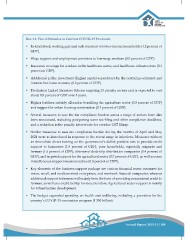
Box 1.1: Fiscal Stimulus to Combat COVID-19 Pandemic
• In-kind (food; cooking gas) and cash transfers to lower-income households (1.2 percent of
GDP).
• Wage support and employment provision to low-wage workers (0.5 percent of GDP)
• Insurance coverage for workers in the healthcare sector; and healthcare infrastructure (0.1
percent of GDP).
• Additional public investment (higher capital expenditure by the central government and
interest-free loans to states, (0.2 percent of GDP).
• Production Linked Incentive Scheme targeting 13 priority sectors and is expected to cost
about 0.8 percent of GDP over 5 years.
• Higher fertilizer subsidy allocation benefiting the agriculture sector (0.3 percent of GDP)
and support for urban housing construction (0.1 percent of GDP).
• Several measures to ease the tax compliance burden across a range of sectors have also
been announced, including postponing some tax-filing and other compliance deadlines,
and a reduction in the penalty interest rate for overdue GST filings.
• Similar measures to ease tax compliance burden during the months of April and May
2021 were re-introduced in response to the recent surge in infections. Measures without
an immediate direct bearing on the government’s deficit position aim to provide credit
support to businesses (1.9 percent of GDP), poor households, especially migrants and
farmers (1.6 percent of GDP), distressed electricity distribution companies (0.4 percent of
GDP), and targeted support for the agricultural sector (0.7 percent of GDP), as well as some
miscellaneous support measures (about 0.3 percent of GDP).
• Key elements of the business-support package are various financial sector measures for
micro, small, and medium-sized enterprises, and non-bank financial companies, whereas
additional support to farmers will mainly be in the form of providing concessional credit to
farmers, as well as a credit facility for street vendors. Agricultural sector support is mainly
for infrastructure development.
• The budget expanded spending on health and wellbeing, including a provision for the
country’s COVID-19 vaccination program (` 350 billion).
Annual Report 2020-21 | 189
• In-kind (food; cooking gas) and cash transfers to lower-income households (1.2 percent of
GDP).
• Wage support and employment provision to low-wage workers (0.5 percent of GDP)
• Insurance coverage for workers in the healthcare sector; and healthcare infrastructure (0.1
percent of GDP).
• Additional public investment (higher capital expenditure by the central government and
interest-free loans to states, (0.2 percent of GDP).
• Production Linked Incentive Scheme targeting 13 priority sectors and is expected to cost
about 0.8 percent of GDP over 5 years.
• Higher fertilizer subsidy allocation benefiting the agriculture sector (0.3 percent of GDP)
and support for urban housing construction (0.1 percent of GDP).
• Several measures to ease the tax compliance burden across a range of sectors have also
been announced, including postponing some tax-filing and other compliance deadlines,
and a reduction in the penalty interest rate for overdue GST filings.
• Similar measures to ease tax compliance burden during the months of April and May
2021 were re-introduced in response to the recent surge in infections. Measures without
an immediate direct bearing on the government’s deficit position aim to provide credit
support to businesses (1.9 percent of GDP), poor households, especially migrants and
farmers (1.6 percent of GDP), distressed electricity distribution companies (0.4 percent of
GDP), and targeted support for the agricultural sector (0.7 percent of GDP), as well as some
miscellaneous support measures (about 0.3 percent of GDP).
• Key elements of the business-support package are various financial sector measures for
micro, small, and medium-sized enterprises, and non-bank financial companies, whereas
additional support to farmers will mainly be in the form of providing concessional credit to
farmers, as well as a credit facility for street vendors. Agricultural sector support is mainly
for infrastructure development.
• The budget expanded spending on health and wellbeing, including a provision for the
country’s COVID-19 vaccination program (` 350 billion).
Annual Report 2020-21 | 189